

How can you recycle Yarrah packaging?
Recycling is the process by which materials that would otherwise be discarded as waste are collected and made into new products. Recycling is an important part of sustainable waste management and helps conserve natural resources, reduce pollution and minimise the amount of waste going to landfills. By recycling, people and businesses can reduce their impact on the environment and contribute to a more sustainable future.
Recycling advice
Sort the waste
Identify the material of the packaging. A recycling logo often has symbols for different materials such as plastic, paper or metal. Separate waste into these categories as indicated.
Rinse the packaging
When recycling containers such as bottles or cans, rinse them briefly to remove any residue. This helps keep the recycling process more efficient and hygienic.
Prevent contamination
Make sure the waste you recycle is free of non-recyclable items or materials that could contaminate the recycling stream. Contamination can hinder the recycling process.
Use the right containers
If your area has colour-coded recycling bins, use them appropriately. If not, find the nearest recycling collection point that accepts the sorted materials.
Recycling logos
Various recycling logos are depicted on Yarrah packaging that tell more about how the packaging can be recycled. Countries may have different rules. Hence, a packaging may contain several recycling logos. What each logo means is explained below.

General recycling symbol
The general recycling symbol consists of a triangle in the form of three continuous arrows. Below the triangle is an abbreviation of the type of material that makes up the packaging, supplemented by a number inside the triangle to indicate the product category of the material.
On 3 September 2020, Italian legislation made it mandatory to place recycling information (in Italian) on packaging. To display this, the general recycling symbol is used, supplemented by the recycling codes and textual explanations on how to recycle.

CITÉO - Triman/Info-tri
This packaging sorting logo is an initiative from France under the AGEC law (law against waste and to promote circular economy) introduced in Article 17. The logo is a merged logo of Triman and Info-tri. The Triman icon is now complemented by the sorting methods (‘Info-tri’). The logo is intended to provide (French) consumers with information and advice on the correct sorting and recycling of household packaging.
All packaging items (of paper, plastic, aluminium or metal) that can be sorted separately are represented by an icon in the logo, separated by a + sign. At the top of the logo is the abbreviation ‘FR’, which serves to indicate that the sorting rule applies to French territory.

Spanish recycling info
In Spain, Royal Decree 1055/2022 on packaging and packaging waste makes it mandatory from January 2025 to indicate to (Spanish) consumers in which waste container household packaging should be deposited once its life span has expired..
- Yellow = plastic
- Blue = paper
- Green = glass
- Brown = organic material
Recycling by packaging
To make the recycling of Yarrah packaging even easier, below you can read which material the packaging consists of and how best to recycle it for each type of packaging.
Dry food packaging
Yarrah's new dry food packaging is eco-friendly, PFAS-free paper packaging with tear-off plastic lining.
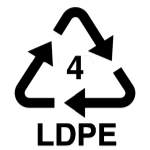 Wat is het? Polyethyleen met lage dichtheid (LDPE), een type plastic dat gebruikt wordt voor zachte en flexibele producten. LDPE is een veilige en recyclebare kunststof met een lage milieu-impact in vergelijking met andere kunststoffen. Het is bestand tegen vocht, chemicaliën en bacteriën en kan gemakkelijk worden gevormd. De 15kg zak droogvoer Adult Kip voor de hond is van dit materiaal gemaakt.
Hoe recycle je het? Je kunt de 15kg zak droogvoer Adult Kip voor de hond in de plastic recyclebak deponeren.
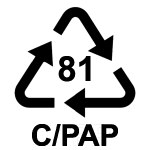 Wat is het? C/PAP 81 staat voor een samengesteld materiaal bestaande uit papier en kunststof.
Hoe recycle je het? In het geval van de Yarrah droogvoerzakken is de buitenste zak van papier en de binnenste zak van plastic. De papieren buitenzak kan in de papier recyclebak. De plastic binnenzak van het Yarrah droogvoer kan je in de plastic recyclebak deponeren.

Tins
Yarrah's wet food tins are metal with a paper label and are delivered to retail in a corrugated cardboard tray.
 What is it?
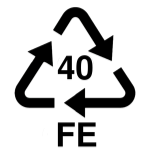
FE 40 refers to metal cans. Yarrah's wet food tins are metal.
What is it?
FE 40 refers to metal cans. Yarrah's wet food tins are metal.
How to recycle?
The metal cans are recyclable. Separate the label from the can, rinse the can and recycle both in the appropriate recycling bins.
 What is it?
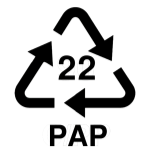
PAP 22 refers to the paper labels of the Yarrah cans.
What is it?
PAP 22 refers to the paper labels of the Yarrah cans.
How to recycle?
Paper can be recycled just fine. The paper labels can be removed from the cans and deposited in the paper recycling bin.

 What is it?
PAP 20 refers to the corrugated cardboard tray in which the cans are delivered to retail.
What is it?
PAP 20 refers to the corrugated cardboard tray in which the cans are delivered to retail.
How to recycle?
Paper can be recycled just fine. The trays can therefore go in the paper recycling bin.
What is it?
Low-density polyethylene (LDPE), a type of plastic used for soft and flexible products. LDPE is a safe and recyclable plastic with low environmental impact compared to other plastics. It is resistant to moisture, chemicals and bacteria and can be easily formed.
How to recycle?
The labels on the trays of cans are made of LDPE 4. These labels can be removed from the trays and then put in the plastic recycling bin.
Alu cups and multipacks
Yarrah's wet food tubs are made of aluminium with a paper label and/or plastic booklet and are delivered to retail in a corrugated cardboard tray.
 What is it? ALU 41 stands for aluminium packaging. In the case of Yarrah, it refers to the aluminium tubs of wet food.
How to recycle? Aluminium is difficult to separate from residual waste. Aluminium tubs are therefore best put in the plastic/can/drink container recycling bin. Separate the paper label from the tub, rinse the tub and recycle both in the relevant recycling bins.
What is it? PAP 22 refers to the paper labels of the Yarrah cans.
How to recycle? Paper can be recycled just fine. The paper labels can be removed from the cans and deposited in the paper recycling bin.

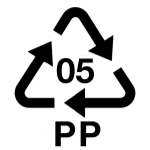 What is it?PP stands for polypropylene, a versatile material used for many different purposes. It has good resistance to chemical solutions and acids and is resistant to bacterial growth. The fold-out booklet on the back of some alu-tubs is made of this material.
How to recycle? Polypropylene can be well reused as a raw material. The material is perfectly recyclable after use. Remove the label from the alu tub and dispose of it in the plastic recycling bin.
What is it? PAP 20 refers to the corrugated cardboard tray in which the alu-cups are delivered to retail.
How to recycle? Paper can be recycled just fine. The trays can therefore be deposited in the paper recycling bin.
Pouch
Yarrah pouches are of a composite material and are delivered to retail in a corrugated cardboard outer box.
 What is it?
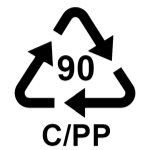
C/PP 90 staat voor een samengesteld polypropyleen. In dit geval gaat het om de samenstelling van een verpakking met plastic en aluminium.
What is it?
C/PP 90 staat voor een samengesteld polypropyleen. In dit geval gaat het om de samenstelling van een verpakking met plastic en aluminium.
How to recycle? Dit materiaal wordt momenteel nog niet op grote schaal gerecycled door lokale overheden. Het beste kun je deze Yarrah pouch omspoelen en vervolgens in de plastic recyclebak doen.
What is it? PAP 20 refers to the corrugated cardboard tray in which the alu-cups are delivered to retail.
How to recycle? Paper can be recycled just fine. The trays can therefore be deposited in the paper recycling bin.

Mini Snack
Yarrah's Mini Snacks are made of plastic and delivered to retail in a corrugated cardboard outer box.
 What is it?
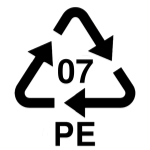
This is polyethylene from the ‘other’ category, as this type of plastic does not fit into any of the other plastic categories. It often consists of several types of plastic or a type of plastic that is less easily recycled. The Mini Snack packaging is made of this material.
What is it?
This is polyethylene from the ‘other’ category, as this type of plastic does not fit into any of the other plastic categories. It often consists of several types of plastic or a type of plastic that is less easily recycled. The Mini Snack packaging is made of this material.
How to recycle?
PE 7 packaging can be recycled in some cases. It is therefore best to put the Mini Snack packaging in the plastic recycling bin.
What is it?
PAP 20 refers to the corrugated box in which the Mini Snacks are delivered to retail.
How to recycle?
Paper can be recycled just fine. The outer box of the Mini Snacks can therefore go in the paper recycling bin.

Chewsticks
Yarrah's chewsticks come in plastic packaging. For retail, the snacks are placed in a corrugated cardboard outer box.
 What is it?
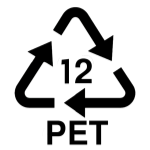
PET 12 is a type of plastic used mainly for plastic bottles and food packaging. In the case of Yarrah, this type of material is used for the packaging of its chewsticks.
What is it?
PET 12 is a type of plastic used mainly for plastic bottles and food packaging. In the case of Yarrah, this type of material is used for the packaging of its chewsticks.
How to recycle? Recycling allows PET to be reused as a raw material. It is therefore important to collect the material separately. It is therefore best to dispose of the packaging of the chewsticks in the plastic recycling bin.
What is it?
PAP20 refers to the corrugated box in which the chewsticks are delivered to retail.
How to recycle? Paper can be recycled just fine. The outer box of the chewsticks can therefore be deposited in the paper recycling bin.

Chicken necks
What is it? PP stands for polypropylene, a versatile material used for many different purposes. It is highly resistant to chemical solutions and acids and is resistant to bacterial growth. The packaging of Yarrah's chicken necks dog snack is made of this material, among others.
How to recycle? Polypropylene can be well reused as a raw material. The material is perfectly recyclable after use. It is best to dispose of the chicken necks packaging in the plastic recycling bin.
What is it? This is polyethylene from the ‘other’ category, as this type of plastic does not fit into any of the other plastic categories. It often consists of several types of plastic or a type of plastic that is less easily recycled. Besides PP05, the chicken neck packaging also consists of this material.
How to recycle? PE 7 packaging can sometimes be recycled. It is therefore best to put the packaging of chicken necks in the plastic recycling bin.

Vegan biscuits
What is it? Low-density polyethylene (LDPE), a type of plastic used for soft and flexible products. LDPE is a safe and recyclable plastic with low environmental impact compared to other plastics. It is resistant to moisture, chemicals and bacteria and can be easily moulded. The packaging of the Vega biscuits dog snack is made of this material.
How to recycle? You can dispose of the Vega biscuits' packaging in the plastic recycling bin.

Vegan dental sticks
What is it? PP stands for polypropylene, a versatile material used for many different purposes. It is highly resistant to chemical solutions and acids and is resistant to bacterial growth. The packaging of Yarrah dental sticks for dogs is made of this material.
How to recycle? Polypropylene can be well reused as a raw material. The material is perfectly recyclable after use. You can therefore dispose of the packaging of the dental sticks in the plastic recycling bin.

Cat litter
What is it? Low-density polyethylene (LDPE), a type of plastic used for soft and flexible products. LDPE is a safe and recyclable plastic with low environmental impact compared to other plastics. It is resistant to moisture, chemicals and bacteria and can be easily moulded. The packaging of Yarrah cat litter is made of this material.
How to recycle? You can dispose of the cat litter packaging in the plastic recycling bin.

