

Feeding a puppy
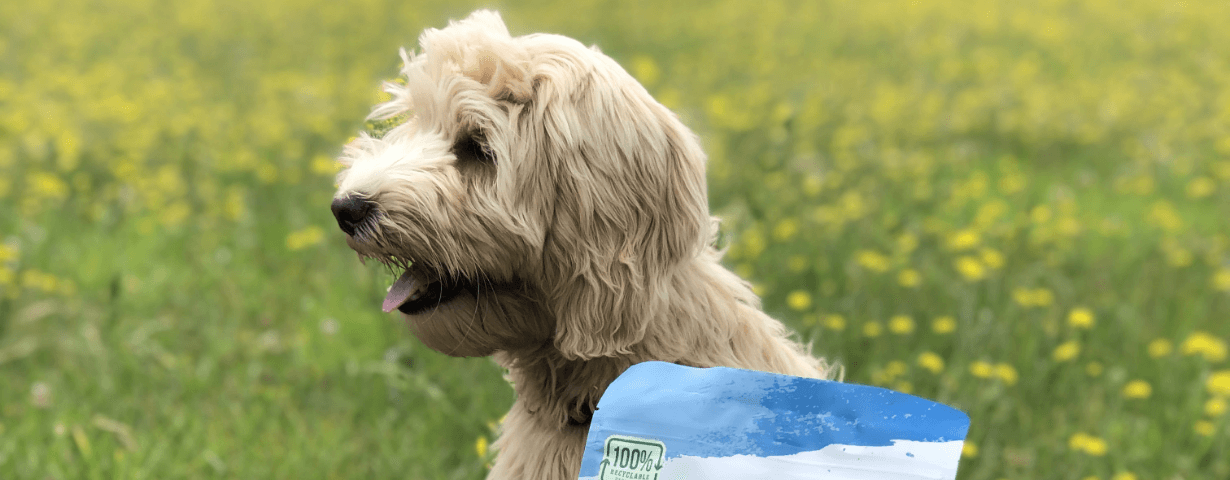
Of course you want the best for your new dog and the correct nutrition is the most important part of raising your pup. Feeding a puppy the right food ensures that your little one gets all the nutrients they need to grow up healthy and strong.
Here you can read all about the best puppy food, how often and how much to feed your pup and the right way to use puppy treats as rewards.
Why puppy food differs from adult dog food
The main difference between the nutritional needs of puppies and adult dogs is that puppies need additional nutrients to support their bones, organs and muscles that are growing so fast. So the nutritional needs of adult dogs are very different from those of young, growing dogs.
Yarrah's special puppy food, as an example, is enriched with extra proteins and fats to support your young pup’s growth. It also contains organic peas which are rich in fibre, ensuring the optimal balance between calcium and phosphorus needed for healthy bone growth. Feeding your dog the right puppy food is important to prevent growth problems and to keep their blood sugar levels in check.
Yarrah's puppy food also contains sustainable caught MSC certified herring, packed with anti-inflammatory omega-3 and -6 fatty acids. These nutrients also maintain your puppy’s coat and skin in top condition and help to keep their muscles flexible.
Yarrah's puppy food is also completely free from artificial fragrances, colouring, flavours, pesticides and GMO. For the past 30 years we have ensured that every dog and cat can enjoy tasty meals that are also organic, complete, and provide all the nutrients they need.
From weaning to solid food
Until about 4 weeks of age puppies are fed only by breast milk from their mother. After this, they are no longer able to get all the calories they need from breast milk. The breeder then starts weaning the pups, weaning them from suckling only to solid food. At about 7 to 8 weeks, puppies are usually fully weaned onto dry puppy food.
Unless your own dog has had pups, you will usually not be involved in the weaning process. In the UK it is recommended that puppies should not be separated from their mother before they are eight weeks old. This means that when you pick your new puppy up from the breeder they should be fully weaned.
However, many vets recommend that you initially moisten the kibble with a bit of water, especially if they are younger than 8 weeks. The chunks should not be soaked - just add enough to get a spongy texture. The transition from breast milk to solid food will be easier this way.
How to choose the right puppy food?
Your puppy’s nutritional needs change constantly during the first six months. This is why feeding a puppy only food that has been specially developed for puppies is important.
Also keep an eye on their general health and development. If your pup has a nice shiny coat, is energetic, and likes to play, then they are getting enough of the right food.
How often should a puppy be fed?
After weaning, puppies should eat three times a day. At six months of age this can be changed to twice a day. Puppies grow the most during their first five months and it is important to keep up their energy levels.
You also should make sure that you are not feeding a puppy too much, especially with larger breeds. Big dogs have a higher risk of developing joint problems if they are overweight. If your puppy seems to be gaining too much weight, you should still feed them three times a day, but reduce the size of the portion. It is quite normal for a puppy to have some baby fat, but by the age of 5 months they should have grown into most of their loose skin.
What about puppy treats?
Most breeders and vets are hesitant when it comes to giving a puppy treats as a reward. Not necessarily because the snacks are unhealthy, but because most owners tend to give their cute puppy more snacks than is good for them.
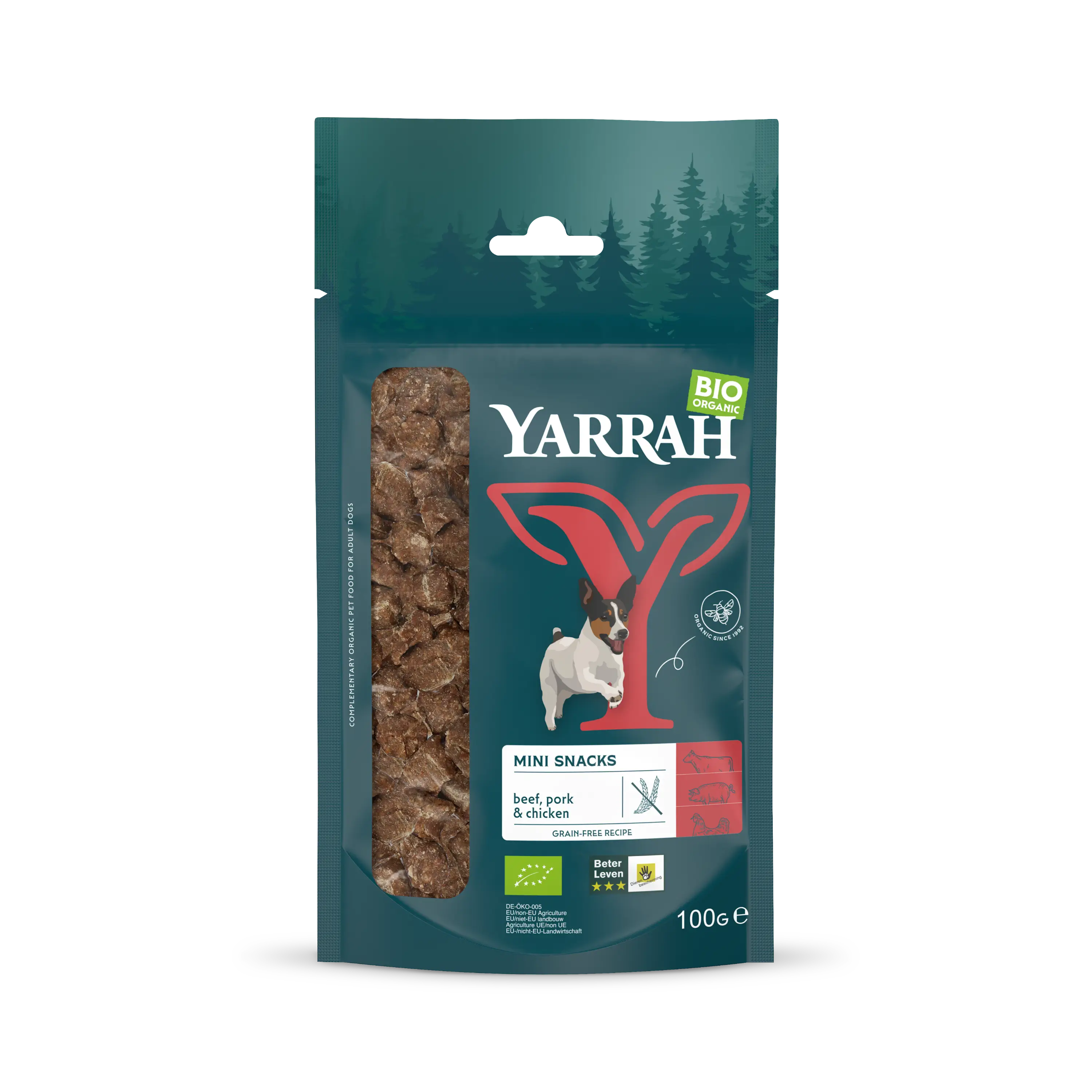
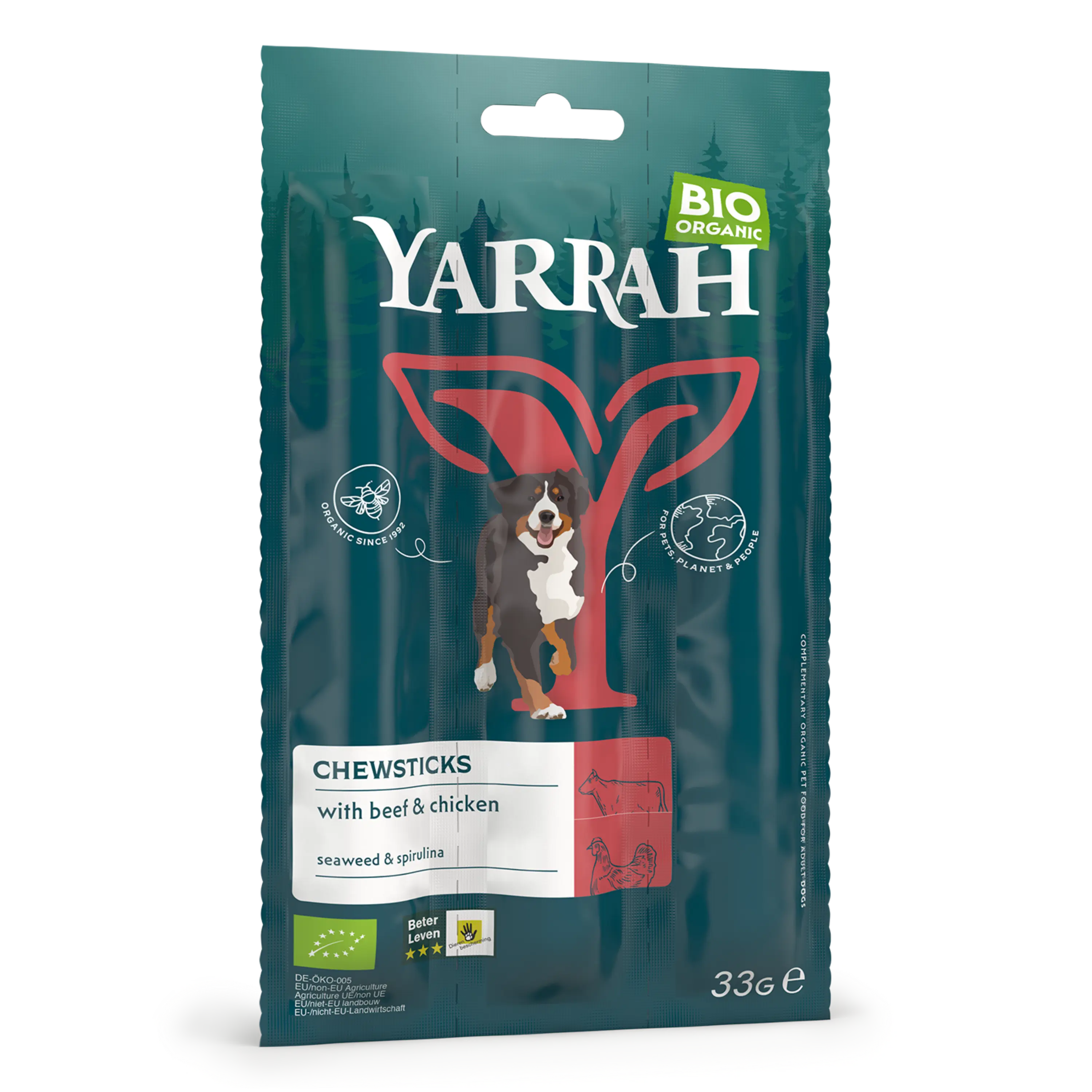
Your puppy should not get more than 5% of their daily calorie allowance in puppy treats and rewards. Also always make sure that any treats you give are suitable for puppies. You can feed puppies Yarrah’s organic dog chew sticks. These treats are easily broken into smaller pieces so that you can control the amount of calories you give your pup and also so that they are easier for the puppy to chew.
More tips on raising your pup:




Organic cat food: 5 benefits for your cat and the planet
Cat

Renewed chewsticks for dogs and cats less beef more impact
Our world

